UDS, Partners Host Climate–Health Workshop to Drive Evidence-Based Action in Northern Ghana
The University for Development Studies (UDS), in collaboration with the Ghana Health Service and international partners, has hosted a high-level climate–health workshop aimed at translating research evidence into practical interventions to address the growing impact of climate change on vulnerable communities in Northern Ghana.
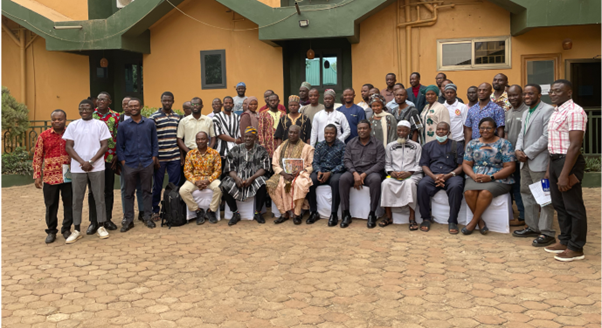
The workshop, held under the theme “Turning Evidence into Action: Climate–Health Conversations from Northern Ghana,” brought together researchers, health professionals, policymakers, and community stakeholders to examine how climate change is affecting health outcomes and to co-design sustainable solutions rooted in local realities.
Opening the session, a lead researcher from UDS, Prof. Victor Mogre, underscored the importance of moving beyond academic findings to actionable outcomes.
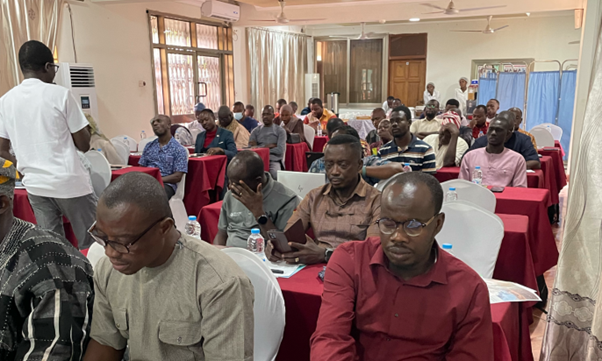
“The goal of this workshop is not just to present research findings, but to ensure that evidence leads to real action. Solutions must be shaped with communities, grounded in local realities, and designed to last,” he stated.
The Northern Regional Director of the Ghana Health Service, Dr. Kudjoe, highlighted the evolving nature of public health challenges in the face of climate change.
“Some diseases we once thought were under control are re-emerging, while others continue to burden our communities. This workshop gives us the opportunity to listen to the data and better understand how climate change is reshaping health outcomes,” he noted, while commending the research team for producing timely and relevant evidence.
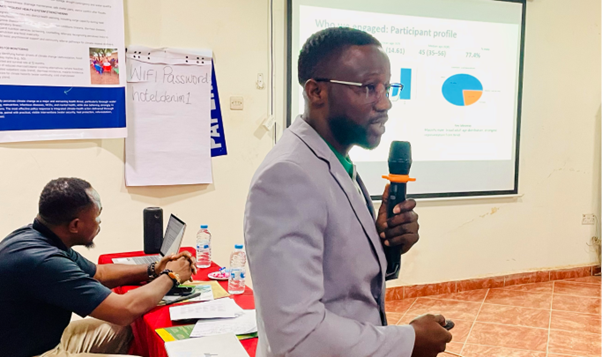
Presentations at the workshop revealed compelling insights from communities across Kumbungu, Savelugu, Mion, and Yendi, where residents linked climate change to declining agricultural productivity, food insecurity, and a rise in health challenges including respiratory diseases, malnutrition, and mental health concerns.
According to Mr. Bright Amoore, who presented findings from the study, community perceptions of climate change were shaped by both environmental awareness and cultural beliefs, with causes attributed to deforestation, emissions, and even spiritual factors.
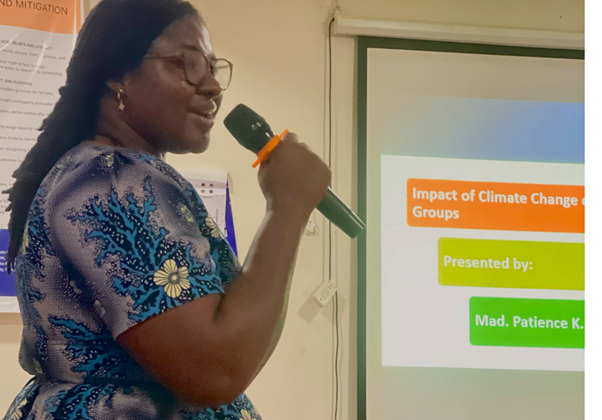
A key highlight of the discussions was the disproportionate impact of climate change on women, particularly pregnant and lactating mothers. Presenting on vulnerable groups, Madam Patience K. Gaa described how prolonged heat, erratic rainfall, and water scarcity are affecting maternal health and household wellbeing.
“Women described heat during pregnancy as unbearable, with many reporting symptoms such as headaches, weakness, and difficulty sleeping. These are not abstract issues—they are lived realities,” she explained.
Participants also raised concerns about food insecurity, noting that unpredictable rainfall patterns are making farming increasingly difficult, thereby worsening malnutrition and, in some cases, forcing migration.
Prof. Mogre emphasized the urgency of addressing these challenges: “Food security is no longer a distant risk—it is already a lived reality that demands urgent attention from government and development partners.”
Discussions on mitigation strategies revealed strong community support for afforestation, reduced charcoal use, and stricter enforcement of environmental regulations. Mr. Bruce A. Abugri noted that communication strategies must leverage trusted local channels.
“Radio remains the most trusted platform, especially when messages are reinforced by chiefs, religious leaders, and health workers,” he observed.
The workshop also featured interactive sessions where participants worked in groups to design interventions focusing on messaging, delivery channels, cultural adaptation, and long-term sustainability.
In a powerful reflection of community sentiment, Prof. Mogre shared a quote from a female leader in Yendi: “Climate change feels like a war—we are all struggling, so we must act together.”
Closing the workshop, Dr. Kudjoe called for urgent implementation of the proposed strategies, including intensified afforestation efforts, enforcement of environmental bye-laws, and expansion of climate–health interventions to underserved areas.
Prof. Mogre, in his final remarks, urged participants to carry the knowledge gained beyond the workshop.
“Generating knowledge is only the first step. It must be shared, discussed, and translated into action within our communities,” he concluded.
The workshop reflects UDS’s growing leadership in linking research to policy and practice, particularly in addressing critical development challenges facing Northern Ghana.